How to read a chronograph dial
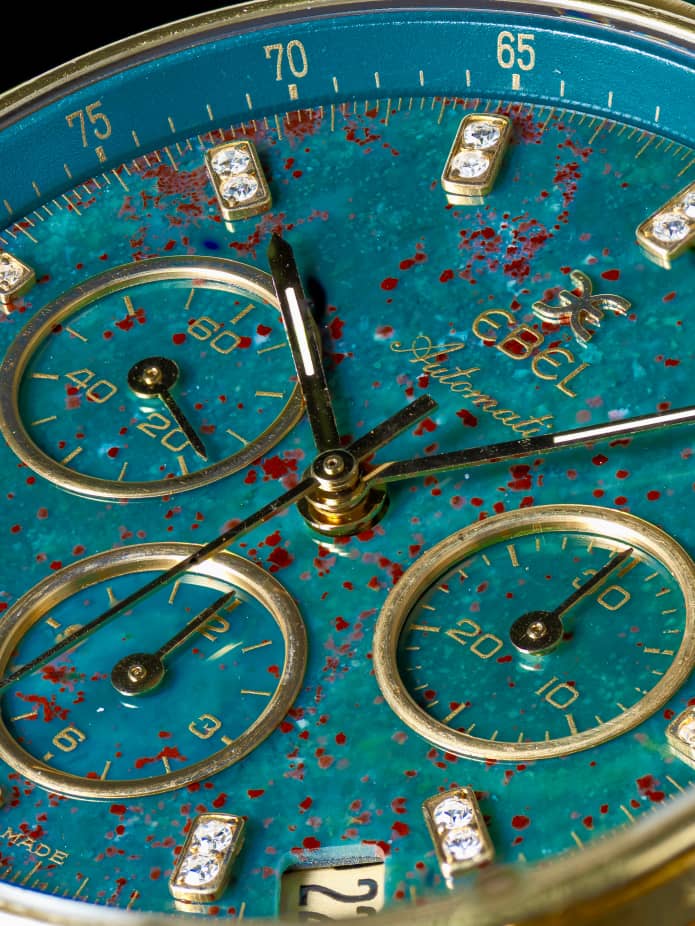
The long central hand, the small seconds and the registers each have a job. Here’s how to tell them apart.
Start with the hand that is already moving
On many chronographs, the long central seconds hand belongs to the stopwatch and stays at twelve until you start it. The smaller hand that keeps moving is often the running seconds. Watch the dial for a moment before touching the pushers.
Read the registers before timing anything
Start the chronograph and see which hands move. One register may count elapsed minutes, and another may count hours. Read the numerals around each subdial. Their positions and capacities vary by movement.
Try a one-minute test
Start the stopwatch, let the central hand go around once, then stop it. The elapsed-minute register should show one minute. On a conventional two-pusher chronograph, stop before resetting. Follow the maker’s instructions if the watch uses a different system.
A scale needs context
A tachymeter estimates average speed over a known distance. Over one kilometre, a 30-second reading corresponds to 120 km/h. Without a measured distance, the same reading tells you elapsed time only.