
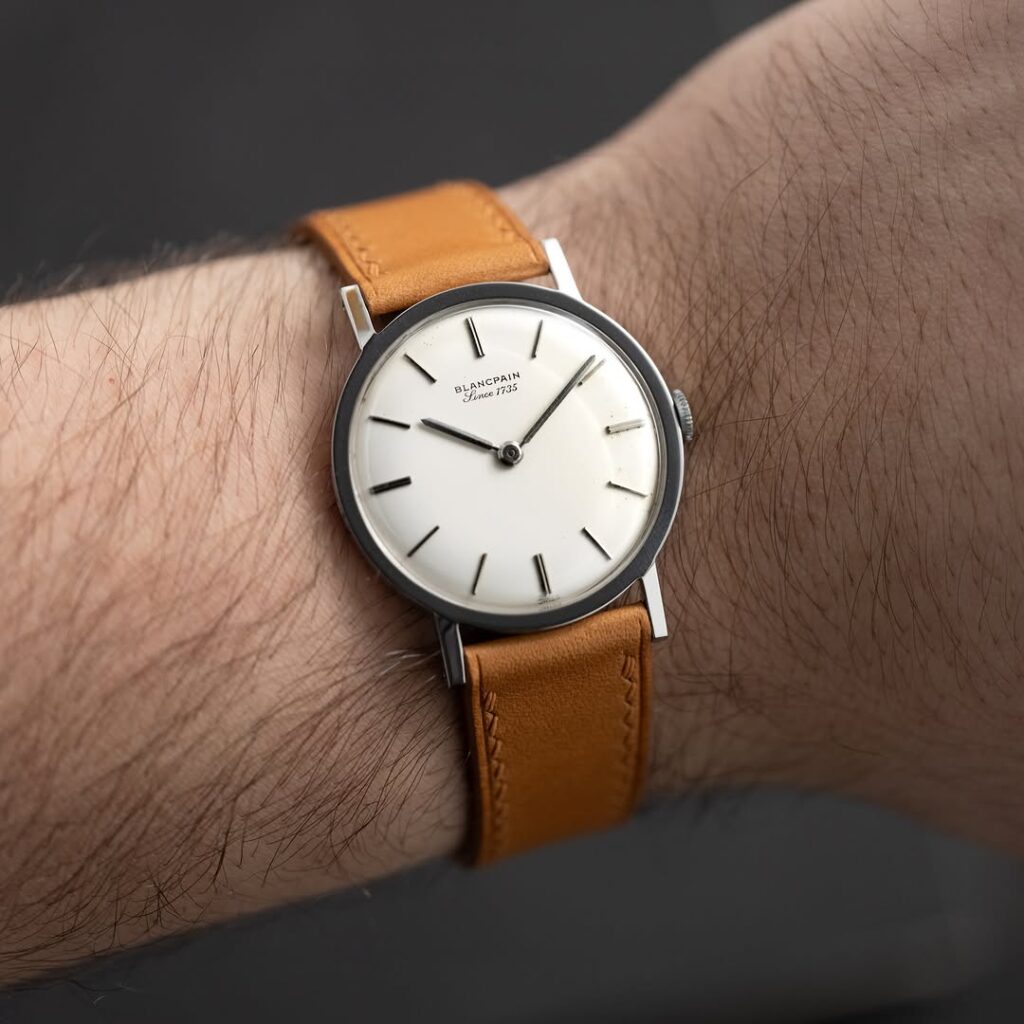
A well-chosen watch does more than tell the time. It complements your style, reflects your personality and becomes an extension of the way you present yourself to the world.
There is something uniquely personal about choosing a watch. Unlike many accessories, a wristwatch is worn throughout the day, often becoming part of one’s identity. It can communicate sophistication, confidence, attention to detail and an appreciation for craftsmanship without saying a single word.
Yet, with countless designs, sizes, movements, materials and brands available, finding the right timepiece can feel overwhelming. Should you choose a classic dress watch, a contemporary sports watch or a minimalist everyday companion? Is a larger case more impressive, or does a smaller, understated design offer greater elegance?
The truth is that the perfect watch is not necessarily the most expensive or the most fashionable. It is the one that fits your wrist comfortably, complements your personal style and suits the demands of your lifestyle.
Here is what to consider when choosing a watch that genuinely fits.
1. Start With Your Wrist Size
One of the most important considerations when buying a watch is proportion. A beautiful timepiece can lose much of its appeal if it looks disproportionately large or unusually small on the wrist.
Before purchasing, take a moment to measure your wrist circumference using a flexible measuring tape. If you do not have one, a strip of paper and a ruler will work just as well.
However, wrist circumference is only part of the equation. You should also consider the watch’s case diameter and lug-to-lug measurement.
Case diameter: This is the width of the watch case, generally measured in millimetres without including the crown.
Lug-to-lug distance: This measures the distance between the tips of the upper and lower lugs. It helps determine whether the watch will sit comfortably within the width of your wrist.
Case thickness: This affects how prominently the watch sits on your wrist and whether it slides comfortably beneath a shirt cuff.
A useful starting point is to ensure that the watch’s lugs do not extend beyond the edges of your wrist. Nevertheless, personal preference and case design matter, so use measurements as a guide rather than an inflexible rule.
2. Choose a Case Size That Complements Your Wrist
Watch sizes have evolved over the years, with both oversized statement pieces and smaller, traditionally proportioned watches enjoying their place in modern horology.
For a balanced appearance, consider the following general starting points:
Small wrists: Explore watches around 34–38 mm.
Medium wrists: Consider approximately 38–42 mm.
Larger wrists: Explore 40–44 mm and above, depending on the design.
These are broad style guidelines, not universal sizing rules. A watch’s lug shape, bezel, dial design and overall proportions can make two watches with identical case diameters look very different.
For example, a minimalist watch with a slim bezel may appear larger than a watch with a thicker bezel and a smaller dial. Similarly, a watch with long lugs may occupy more wrist space than its diameter suggests.
The best approach is to try the watch on, examine it from different angles and make sure it feels balanced rather than overwhelming.
3. Consider the Watch’s Design and Your Personal Style
A wristwatch should complement the way you dress and the image you wish to communicate.
Some watches are designed to make a statement, while others are appreciated for their simplicity and restraint.
Dress watches
Dress watches are traditionally characterised by clean dials, refined cases, elegant proportions and relatively understated detailing. They pair naturally with formal clothing, business attire and tailored outfits.
A simple silver or white dial with a leather strap is a particularly versatile choice for someone who appreciates timeless sophistication.
Sports watches
Sports watches are generally designed with durability and practicality in mind. Depending on the model, they may feature stronger cases, enhanced water resistance, luminous hands and more robust straps or bracelets.
They are suitable for people who want a watch that can accommodate a more active lifestyle.
Minimalist watches
Minimalist watches focus on simplicity. Their uncluttered dials, restrained markings and clean silhouettes make them easy to pair with different outfits.
They are an excellent option for those who prefer subtle elegance over excessive detailing.
Statement and collector’s watches
Some watches are appreciated for their unusual complications, distinctive dial designs, precious materials or exceptional mechanical craftsmanship.
These timepieces often appeal to collectors and enthusiasts who value horological individuality.
Ultimately, your watch should feel like a natural extension of your wardrobe rather than an accessory that competes with it.
4. Pay Attention to the Watch Strap
The strap can dramatically influence how a watch looks and feels. It is not simply a mechanism for securing the timepiece to your wrist; it is an important part of its overall character.
Leather straps remain a timeless favourite, particularly in luxury dress watches.
Black leather: Elegant, formal and easy to coordinate with darker outfits.
Brown leather: Warm, versatile and particularly attractive with classic or earth-toned clothing.
Tan leather: Offers a lighter, contemporary appearance while retaining a traditional feel.
Stainless-steel bracelets: Provide a structured, versatile look and are generally well suited to everyday wear.
Rubber straps: Practical for sports and water-oriented activities when designed for the intended use.
Fabric straps: Offer a relaxed, casual appearance.
When choosing a strap, pay attention to its width, length, material and construction. The strap should fit comfortably without pinching your wrist or allowing the watch to move excessively.
For leather straps, remember that genuine leather requires reasonable care. Avoid unnecessary exposure to moisture, excessive heat and prolonged direct sunlight.
5. Select a Dial That Suits Your Personality
The dial is often the first thing people notice about a watch. Its colour, numerals, hands and overall arrangement determine much of the watch’s visual identity.
A white or silver dial is associated with classic elegance and excellent versatility. Black dials offer a stronger, more dramatic appearance, while blue dials provide a sophisticated alternative that works particularly well with both formal and casual clothing.
For someone who prefers traditional watchmaking, Roman numerals and finely finished hands may be appealing. Others may prefer simple baton markers, Arabic numerals or an open-worked dial that reveals elements of the movement.
The most important consideration is legibility. A beautiful dial should still allow you to read the time easily.
Choose a design that you will continue to appreciate long after current fashion trends have changed.
6. Understand the Movement: Quartz, Automatic or Manual
The movement is the mechanism responsible for keeping time. Understanding the differences can help you choose a watch that suits your expectations and maintenance preferences.
Quartz movement
Quartz watches are battery-powered and regulate time using the vibrations of a quartz crystal. They are generally accurate, convenient and require relatively little routine attention.
Automatic movement
Automatic watches are mechanical timepieces that wind themselves through the natural movement of the wearer’s wrist. They do not ordinarily require a battery, although they need appropriate care and periodic servicing.
Manual-winding movement
Manual watches require the wearer to wind the crown periodically to maintain the power reserve. They offer a traditional connection to mechanical watchmaking and are appreciated by enthusiasts who enjoy interacting with their timepieces.
There is no universally superior movement. The right choice depends on whether you prioritise convenience, mechanical craftsmanship, tradition or ease of maintenance.
7. Consider Your Lifestyle and Water Resistance
A watch should be appropriate for the environments in which you intend to wear it.
If you spend most of your time in professional or formal settings, a slim dress watch may be ideal. If you travel frequently or enjoy outdoor activities, a more robust sports watch could be a better investment.
Water resistance deserves particular attention. Watch ratings are not simply decorative numbers, and a rating expressed in metres should not automatically be interpreted as a guaranteed swimming or diving depth.
As a general guide, a watch marked 3 bar or 30 metres is intended for limited everyday water exposure, not swimming. A 5-bar rating may be suitable for swimming on certain models, while 10 bar or higher may offer additional suitability for water activities, depending on the manufacturer’s instructions.
Always consult the specific watch manufacturer’s guidance. Water resistance can also deteriorate as seals age, so periodic inspection is important.
8. Look Beyond the Brand Name
Luxury watches are often associated with prestigious manufacturers, but a recognised name alone does not guarantee that a watch is right for you.
Look closely at the details:
The quality of the case finishing.
The clarity and finishing of the dial.
The movement and its reliability.
The quality of the strap or bracelet.
The manufacturer’s warranty and after-sales service.
The availability of servicing and replacement components.
If you are purchasing a pre-owned luxury watch, pay particular attention to its authenticity, provenance, service history and condition.
A well-made watch should offer more than an impressive name on the dial. It should demonstrate thoughtful design, dependable construction and quality appropriate to its price.
9. Try Before You Buy
Photographs can make a watch look exceptionally attractive, but they cannot tell you everything about how it will feel on your wrist.
Whenever possible, try the watch on before making your decision.
Check that the case sits comfortably, the lugs do not overhang, the strap is secure and the crown does not dig into the back of your hand. Move your wrist naturally and see how the watch feels throughout ordinary movements.
Pay attention to the thickness and weight, too. A watch that looks impressive in a photograph may feel unnecessarily bulky after several hours of wear.
If you are purchasing online, check the exact case dimensions, strap length, return policy and warranty before placing your order.
The Final Word: Choose a Watch That Feels Like You
Choosing the perfect watch is ultimately an exercise in understanding balance. It is about finding the right relationship between proportion, craftsmanship, comfort, functionality and personal expression.
A beautiful timepiece does not need to be oversized, covered in precious stones or immediately recognisable to everyone. Sometimes, the most compelling watches are those that communicate refinement through simplicity.
Whether you are drawn to a traditional leather-strapped dress watch, an intricate mechanical creation or a contemporary everyday design, remember that the best watch is one you enjoy wearing.
Because true elegance is not simply about what you wear. It is about how naturally it fits into who you are.
A great watch tells the time. The right watch tells your story.